
Direct Support Professionals (DSPs) work with people who have intellectual or developmental disabilities, helping them with daily tasks, building life skills, and creating meaningful connections in their community.
It is more than a paycheck. The average starting pay is $14–$16 per hour, and a career as a DSP can open doors to roles in healthcare, social work, education, and case management.
Is a DSP job right for you?
The best DSPs are:
- Patient and understanding. Every person learns and grows at their own pace. If you can stay calm under pressure and support someone’s progress, you have a major skill for this job.
- Compassionate. Being a DSP means showing kindness and building trust with the people you support.
- Adaptable. No two days are the same. One day you might help someone learn to cook; the next, you’re out in the community together.
- Reliable and focused. People count on DSPs to show up and be present.

Benefits of being a DSP
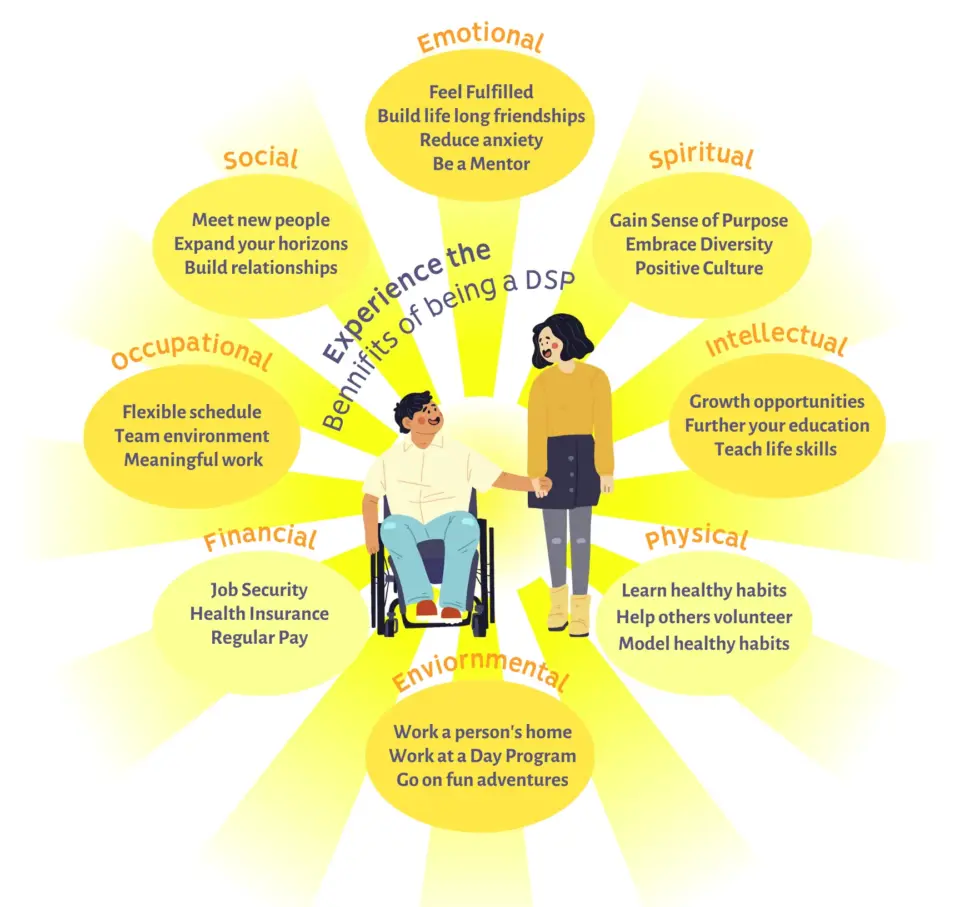
Being a DSP touches every part of life, not just the paycheck.
Emotional
Feel fulfilled. Build life long friendships. Reduce anxiety. Be a mentor.
Intellectual
Growth opportunities. Further your education. Teach life skills.
Environmental
Work a person’s home. Work at a day program. Go on fun adventures.
Occupational
Flexible schedule. Team environment. Meaningful work.
Spiritual
Gain sense of purpose. Embrace diversity. Positive culture.
Physical
Learn healthy habits. Help others volunteer. Model healthy habits.
Financial
Job security. Health insurance. Regular pay.
Social
Meet new people. Expand your horizons. Build relationships.
Preparing for an interview
If you’re applying to be a DSP, here are some questions you may be asked:
- Why do you want to work as a Direct Support Professional?
- Can you tell us more about your experience helping people with disabilities?
- Describe the role of a mentor for someone with a disability.
- How do you plan to keep clients safe from health hazards?
- In your opinion, what is the role of teaching in direct support?
- How important is paperwork in this job?
- How do you feel about helping someone learn to cook or clean their house?
- What do you consider the toughest part of this job?
- What role do a client’s relatives play in your work as a direct support provider?
- What are your salary expectations?
- One hour before your shift, you start to feel unwell (headache or stomach pain, no fever). What will you do?
- What are your future plans, and how long would you like to work as a DSP?
- Do you have any questions for us?